

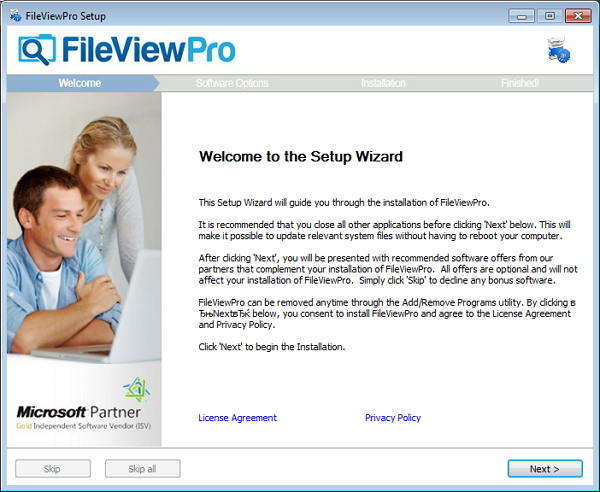
FileViewPro's Key Features for Opening AVM Files

 Launa
Launa
2026-02-24 10:35
9
0
본문
Opening an AVM file with Notepad lets you quickly see whether the file is text-based or binary-only, because the Open with → Notepad view reveals readable words, JSON/XML-like patterns, key=value entries, file paths, or URLs if it’s a metadata/config/support file instead of main content, while unreadable characters indicate a binary file such as caches, databases, antivirus modules, or proprietary assets; if the file shows a single long line, it may still be text (like minified JSON) that Notepad formats poorly, and editors like Notepad++ present it more clearly, whereas freezing suggests it’s too large or too binary for Notepad, so checking file size or using a stronger viewer is recommended, and editing should be avoided to prevent damage, with the file’s source, size, or first visible lines often enough to identify the correct program.
"AVM" isn’t tied to one universal format because extensions are just labels that developers pick freely, so totally unrelated programs may all choose ".avm" for different uses—metadata, security modules, proprietary containers—and Windows itself only uses the extension to guess an opener rather than to understand the contents, meaning that the real way to identify an AVM is by context: which app created it, what folder it resides in, and whether its contents look like readable text or binary, so the extension alone tells you almost nothing without the software source and structure.
Multiple unrelated "AVM" file types exist because the `.avm` extension isn’t reserved for one purpose, so different programs might employ it for media workflows, security modules, or custom data containers, resulting in files that can be text, binary, structured, or opaque, and because the suffix alone provides no certainty, identifying the source application and examining the file’s context and internal makeup is the only solid way to know what kind of AVM you’re dealing with.
 What determines what your AVM file actually is is established by the originating application or device, because `. If you have any concerns relating to where and how you can make use of AVM file support, you could contact us at our web-site. avm` carries no fixed standard; an AVM tied to editing workflows tends to be metadata or project-support data, one tied to security tools may be an internal component or definition update, and one tied to a niche app might be a proprietary cache, and evaluating where the file came from, where it’s stored, and whether it reads as text or binary usually shows what type it is and which software can access it.
To turn the AVM explanation into something actionable, use quick context-based tests, beginning by confirming its origin and checking size—small AVMs often being metadata, larger ones hinting at container/media roles—then opening it with Notepad/Notepad++ to see whether it’s structured text or binary unreadable data, and validating with a signature glance or MediaInfo to determine if it’s true media, after which you can classify it into metadata, security module, proprietary data, or media and take the proper next step like opening with the source app or converting only if it’s genuinely video.
"AVM" isn’t tied to one universal format because extensions are just labels that developers pick freely, so totally unrelated programs may all choose ".avm" for different uses—metadata, security modules, proprietary containers—and Windows itself only uses the extension to guess an opener rather than to understand the contents, meaning that the real way to identify an AVM is by context: which app created it, what folder it resides in, and whether its contents look like readable text or binary, so the extension alone tells you almost nothing without the software source and structure.
Multiple unrelated "AVM" file types exist because the `.avm` extension isn’t reserved for one purpose, so different programs might employ it for media workflows, security modules, or custom data containers, resulting in files that can be text, binary, structured, or opaque, and because the suffix alone provides no certainty, identifying the source application and examining the file’s context and internal makeup is the only solid way to know what kind of AVM you’re dealing with.
What determines what your AVM file actually is is established by the originating application or device, because `. If you have any concerns relating to where and how you can make use of AVM file support, you could contact us at our web-site. avm` carries no fixed standard; an AVM tied to editing workflows tends to be metadata or project-support data, one tied to security tools may be an internal component or definition update, and one tied to a niche app might be a proprietary cache, and evaluating where the file came from, where it’s stored, and whether it reads as text or binary usually shows what type it is and which software can access it.To turn the AVM explanation into something actionable, use quick context-based tests, beginning by confirming its origin and checking size—small AVMs often being metadata, larger ones hinting at container/media roles—then opening it with Notepad/Notepad++ to see whether it’s structured text or binary unreadable data, and validating with a signature glance or MediaInfo to determine if it’s true media, after which you can classify it into metadata, security module, proprietary data, or media and take the proper next step like opening with the source app or converting only if it’s genuinely video.
댓글목록0
댓글 포인트 안내